24th Dec, 2025 | 🕗 6 - 8 minutes
Fine dining is not losing to cheaper food.
It is losing to scattered attention.
Everyone in the industry says, "We sell an experience, not just food." Almost nobody runs their restaurant like that sentence is actually true.
When a guest pays 85 dollars for a plate of pasta, they are not paying for wheat, eggs, and sauce. They are paying for attention. They are paying for someone to remember how they like their water. They are paying for someone to suggest a wine that matches their mood. They are paying for someone to notice when their glass is empty without them asking.
That is presence.
And presence is almost impossible when your staff is constantly pulled away by a ringing phone.
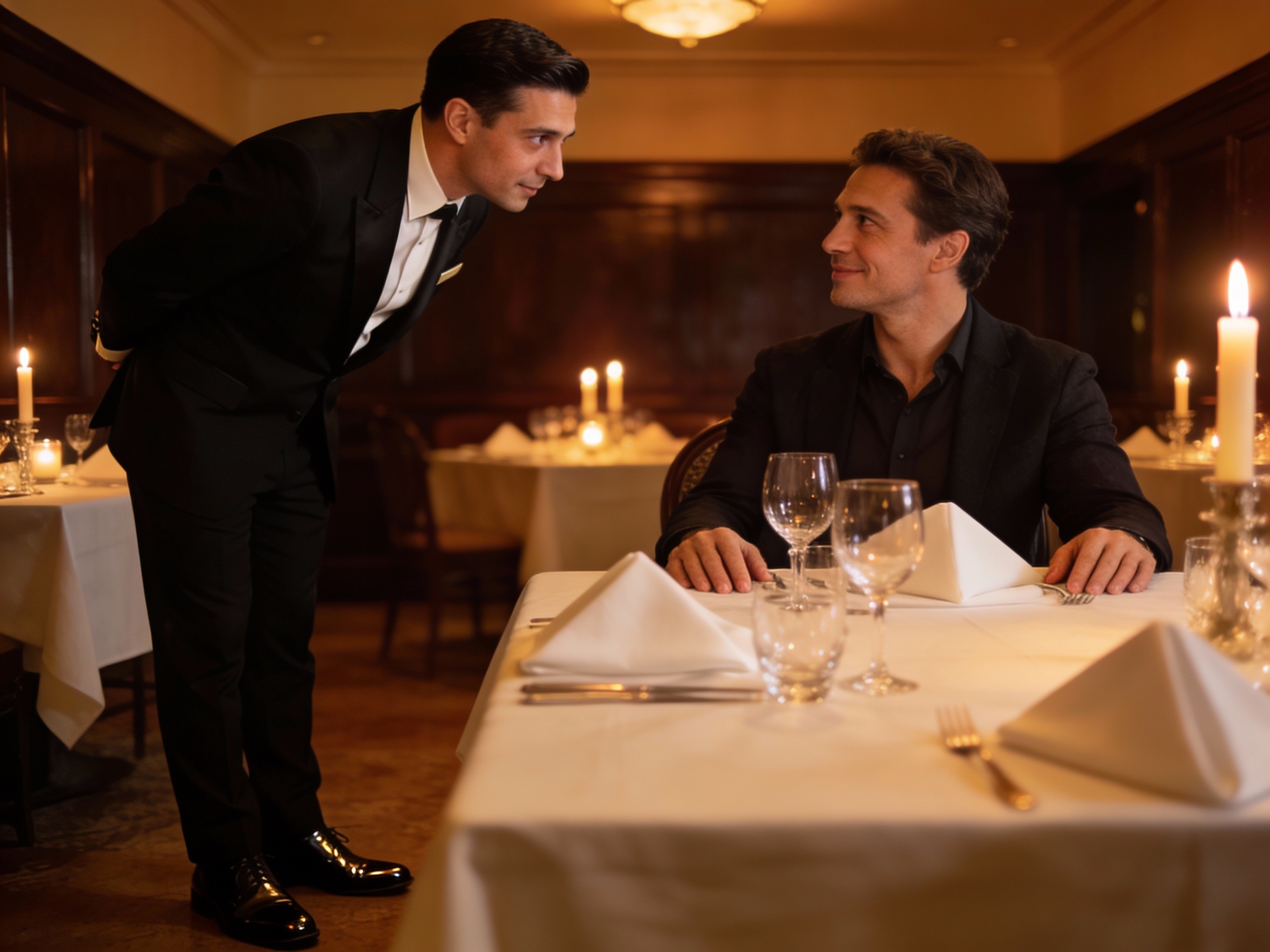
A guest walks into your restaurant on a Friday night. They booked this table two weeks ago. They put on nicer clothes. They chose your place instead of ten others. By the time they sit down, they already want this to be special.
A good server reads this. They notice the body language. They see if this is a date, a business dinner, a celebration, or a quiet escape. Then the server makes small choices that change everything. They slow down with one table. They speed up with another. They linger a second longer when someone hints they had a rough week.
Now picture what happens when your phone rings.
The host hears the ring and has to decide: greet the guest in front of me or catch the call. The server hears the ring and thinks: is that a pre-order, a VIP, a complaint? The manager hears the ring and wonders: do I need to jump in if nobody picks up?
Even if they do not move, part of their brain moves. Their attention splits.
The guest feels this shift. Not always consciously. But they feel it in slightly slower eye contact, slightly delayed response, slightly less warmth in the tone. The food is still great. The plates are still pretty. But the magic is gone.
Your server was 90 percent present instead of 100 percent present. That 10 percent gap is where loyalty lives. In high-end dining, that gap is worth 40 dollars per plate in perceived value.
Most big-city fine dining kitchens can now source the same ingredients, hire cooks with similar training, and reproduce the same techniques. Access has leveled out. The gap between "good food" and "great food" is shrinking.
But the gap between "good service" and "deep presence" is growing.
Two restaurants can serve almost the same dish. One feels like a transaction. The other feels like a memory. What separates them is rarely the recipe. It is how fully the staff can be present.
For decades, the answer was simple: hire more people. More hosts. More bussers. More runners. More managers. That worked when labor was cheaper. It works less every year. You can keep adding bodies, but if the system is broken, more people only spread the chaos around.
In a typical fine dining night, your key people juggle the phone, texts from regulars, online reservation alerts, walk-ins at the door, and questions from the kitchen. They are switching contexts all night long. Every context switch has a mental cost. You cannot train your way out of that. You have to redesign the work.
Now labor costs keep rising and margins keep shrinking. At some point, you cannot keep throwing people at the problem. The answer is no longer "hire more." The answer is "take low-value work away from humans and protect their presence."
Imagine designing your restaurant with one rule: every human should spend as much time as possible on things only humans can do. Reading emotion. Building rapport. Handling nuance. Making small judgment calls. Creating surprise and delight.
Now list all the tasks your humans do that do not require a human. Answering "What time do you close?" Checking if you have a 7 PM slot on Saturday for four people. Taking down a phone number and spelling out an email address. Repeating your address for the fifth time that night.
These tasks do not build relationship. They do not increase loyalty. They do not create memorable experiences. Yet you pay your people high hourly rates to do them.
This is where voice AI comes in, if you use it correctly.
Voice AI is not a robot waiter. It is your tireless, invisible phone host. It answers every call, every time. It handles basic questions with no attitude and no fatigue. It takes reservations and updates them without spelling errors. It handles call volume spikes during peak service without stress.
Then it hands off the edge cases to humans. The human staff still handles complex requests, special occasions, angry guests who need real empathy, and high-value VIP situations.
You are not removing human contact. You are removing human friction.
When your staff gains back attention, you see changes. Higher average check because servers have time to offer a second bottle or dessert. Higher tip percentages because guests feel cared for instead of processed. Higher repeat visit rates because the experience feels smooth and warm. Lower staff turnover because the job feels professional, not chaotic.
Presence may sound soft, but it shows up in hard numbers.
Most owners measure hard costs: food cost, labor, rent, utilities. Few measure the cost of split attention. A guest waits ninety seconds longer than they should to be greeted. A water glass goes empty for three minutes. A server forgets a small detail from the guest's order. Taken alone, none of these kill a restaurant. Together, they create a pattern: "We like that place, but something is always a little off."
Restaurant owners often fear that voice AI will feel cold and off-brand. But what actually feels cold is long hold times, missed calls, rushed greetings, and staff who sound busy and stressed.
A well-tuned voice system with your tone and policies can feel more on-brand than a burned-out host. Warmth is not just a voice. Warmth is consistency, clarity, and respect for the guest's time.
Fine dining used to show status through excess. More staff on the floor. More steps between courses. More touches at the table. Guests today care less about how many people touch their plate. They care more about whether the person they interact with actually sees them.
The restaurants that win will make a simple shift: from "How many people can we throw at the problem?" to "How much focus can we give each guest?"
Technology is not the star of that story. It is the stagehand. It pulls cables out of the way. It sets the scene. So your people can do what only they can do: be present.
Look a guest in the eye. Understand what tonight means to them. Make it feel like more than a meal.
Because the guest does not come back for the exact plate they had last time.
They come back for how they felt while they were eating it.
Presence matters more than any menu item.